Category: Current

  • Let culture keep you warm this winter!

    Let culture keep you warm this winter!

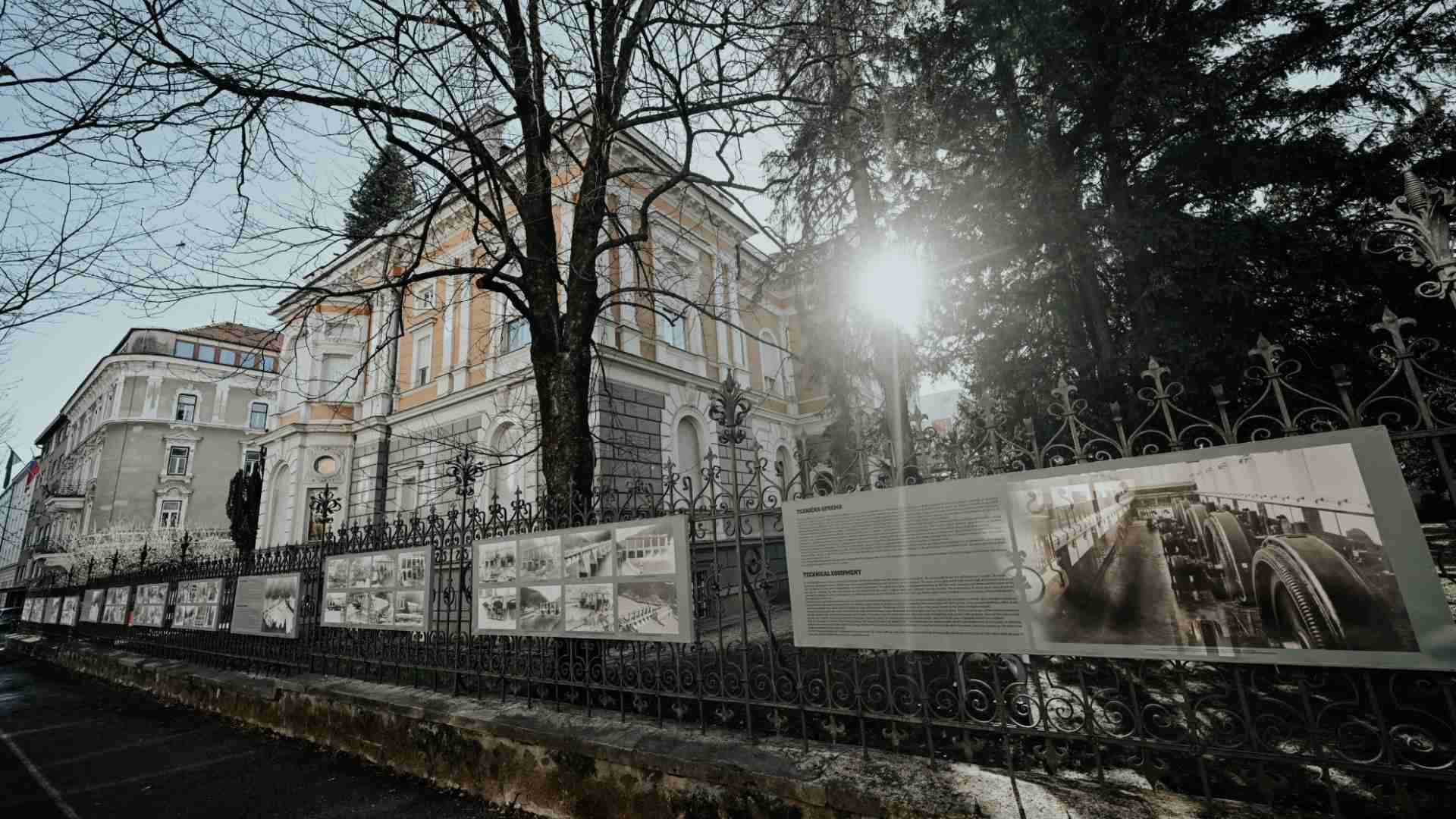
    When the cold sets in outside and the days grow shorter, the museum turns into the perfect sanctuary. We invite you to trade the winter grey for the vibrancy of history.

    Why visit us right now?

    Peace to explore: Winter brings a calmer atmosphere, ideal for an in-depth tour of the exhibitions without the noise and the crowds.

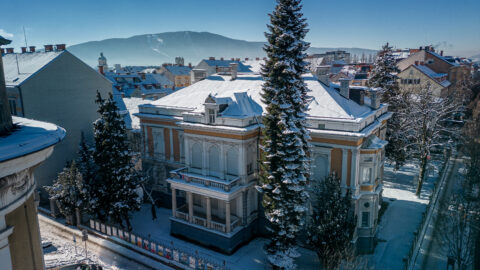
    The museum building in the snow

    Inspiration for new beginnings: Every exhibition tells a story that sparks new thoughts and creative energy for the year ahead.

    Whether you are looking for a place for quiet reflection, an educational family outing, or just a short escape from the cold, our doors are open.

    Join us and let the stories of the past warm your heart!

  • Excursion to Zagreb

    Excursion to Zagreb

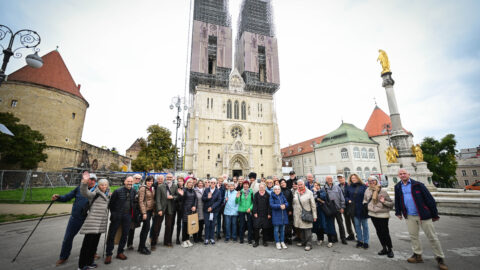
    On Wednesday, October 15, 2025, a large group of Maribor residents went on an excursion to Zagreb, by invitation of the Maribor Museum of National Liberation (Muzej narodne osvoboditve Maribor).


    First, we visited the Museum of the City of Zagreb (Muzej grada Zagreba), where we were warmly welcomed and guided through the permanent exhibition as well as an exhibition showcasing Zagreb Gold.


    Then we attended the opening of the exhibition Did you want to see me broken? (Ste me hoteli videti strto?) at the Slovenian House Zagreb (Slovenski dom Zagreb). The exhibition was prepared three years ago by 20 authors from various Slovenian institutions and associations, at the initiative of the then-director of the Maribor Museum of National Liberation, Dr. Aleksandra Berberih – Slana, who is today the director of the Museum of the City of Zagreb.


    The exhibition speaks about human rights and the violation thereof, offering personal insights into past severe individual and also collective violations. It reminds us that periods when human rights were distant from today’s understanding should likewise not be forgotten. This is one of the exhibition’s strongest messages. The war currently raging mercilessly not so far away unfortunately also tells us that we are capable of forgetting all past experiences or even ignoring them.


    At the opening of the exhibition, we were greeted by Mr. Darko Šonc, a Maribor native and President of the Slovenian House Zagreb. We were also addressed by the Ambassador of Slovenia to Croatia, H.E. Mr. Gašper Dovžan. Simona Tripkovič, the Director of the Maribor Museum of National Liberation, presented the exhibition, and the representative of our founder, the Municipality of Maribor, Deputy Mayor Mrs. Davorka Pregl, conveyed greetings from the city beneath Pohorje and officially opened the exhibition.


    Time quickly passed in pleasant socializing and conversation.


    Photo: M. Pigac

  • EKO DRAVA 2025: Life by the River

    EKO DRAVA 2025: Life by the River

    Opening of the photography exhibition Eko Drava 2025 – Life by the River, which will be at Fotografski…


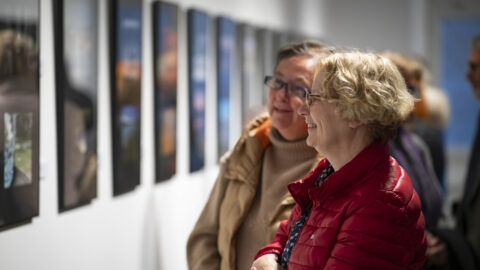
    The colorful photography exhibition is the result of the 15th EKO DRAVA 2025 photo competition. As part of the opening, awards and prizes, determined by the expert commission consisting of photographer Tomo Jeseničnik, Master of Photography Jure Kravanja, and Master of Photography Stojan Kerbler, were also presented.


    The project is organized by Klub Amicus Luminis, led by the renowned Maribor photographer Maja Šivec, and the Maribor Diving Association (Potapljaško društvo Maribor).


    The project’s goal is to showcase the importance of the River Drava for life, as well as other rivers, which are not just a space for human recreation, but also draw attention to our irresponsible environmental behavior, thus raising awareness that we only have one planet.


    Photographer at the exhibition opening: Aleš Žiberna


  • MARIBOR DAY 2025 AT THE MUSEUM OF NATIONAL LIBERATION MARIBOR (MNOM)

    MARIBOR DAY 2025 AT THE MUSEUM OF NATIONAL LIBERATION MARIBOR (MNOM)


    In the month of October, our city celebrates its holiday.


    We wish to celebrate together, and therefore, we invite you to the events that we have prepared for you at the Museum of National Liberation during these festive days:


    Friday, October 17, 2025


    16.00 “Let’s Protect Our City” (Čuvajmo naše mesto), a walk for children aged 8 to 15.


    During the walk, we will highlight inappropriate practices that some people (too) often engage in, such as: the destruction of monuments and statues, city façades, and everything beautiful that enriches our city. “What little Johnny learns, old John knows.”

    Museum of National Liberation Maribor, Uroš Dokl, Katja Rigler


    Meeting point: Museum of National Liberation Maribor


    Additional information: Silva Volf, tel.: 02 235 26 05, 040 780 052


    The number of places is limited (25). Prior registration for the event is required via e-mail:


    DanMaribora@maribor.si

    Saturday, October 18, 2025


    17.00 Cycling tour of the National Liberation Struggle (NOB) monuments: In 2025, we celebrate 80 years of freedom. Numerous monuments in Maribor remind us of the time of the National Liberation Struggle. Each one tells its own story. We will cycle a circular route where they are located and listen to their stories. We will stop at the monuments in: Volkmerjev Prehod, the Freedom Monument (Kodjak), the Hostages Monument, the Slave Klavora memorial plaque. We will cycle to Melje to the Park of Memories and conclude the tour at the building of the former Stalag 18 D. If you do not have your own bicycle, you can use the city’s E-bike network.


    Museum of National Liberation Maribor – Uroš Dokl and Maribor Art Gallery, Brigita Strnad, Maribor Cycling Network.


    Participation in the cycling tour is at your own risk; the use of a helmet is mandatory.


    Meeting point: Volkmerjev Prehod (monument)


    Additional information: Silva Volf, tel.: 02 235 26 05 or Brigita Strnad, tel.: 02 22 94 697, 041 57 50 50


    Sunday, October 19, 2025


    10.00 “Greetings from Maribor” workshop for families


    Participants of the workshop will learn interesting stories, adventures, and images of our city. The workshop is also creative.


    Museum of National Liberation Maribor, Katja Rigler


    Location of the event: Museum of National Liberation Maribor


    Additional information: Silva Volf, tel.: 02 235 26 05


    10.00 “By Bus to Osankarica”: The final battlefield of the Pohorje Battalion fighters.


    First, a tour of the exhibition about the Pohorje Battalion, followed by a hike to the final battlefield of the Pohorje Battalion fighters. A historical presentation of the battalion from its establishment to its fall. Art historical significance of the monument at the final battlefield.


    Museum of National Liberation Maribor, Dr. Irena Mavrič Žižek, and Maribor Art Gallery, Živa Kleindienst.


    Additional information: Silva Volf, tel.: 02 235 26 05


    The meeting point for bus tours is Maribor Bus Station, Mlinska ulica (or Mlinska Street).


    The number of seats on the bus is limited (15). Prior registration for the bus tours is required via e-mail:


    DanMaribora@maribor.si

    ALL EVENTS ARE FREE OF CHARGE!


    You are kindly invited VLJUDNO VABLJENI

  • “Švercanje”

    “Švercanje”

    Photo highlights from the successful opening of the “Smuggling” exhibition


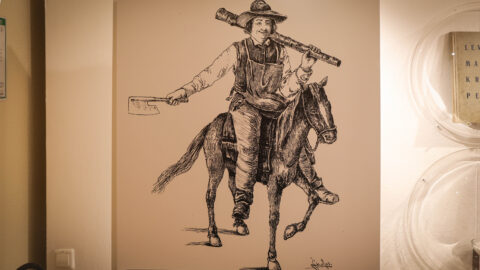
    The exhibition, which already attracted a large number of visitors at its opening, is on view at the Museum of National Liberation Maribor.

    We invite you to view this interesting exhibition!

    Foto: M. Pigac.

  • “IN THE BEAT OF BROADCASTING, IN THE RHYTHM OF WORDS. RADIO MARIBOR – 80 YEARS” The Regional Programme of Radio Maribor celebrates

    “IN THE BEAT OF BROADCASTING, IN THE RHYTHM OF WORDS. RADIO MARIBOR – 80 YEARS” The Regional Programme of Radio Maribor celebrates

    May 11th this year marked exactly 80 years since Radio Maribor first went on air in 1945. Plans for establishing a radio station in the Slovenian northeast were emerging two decades earlier, but the idea faced better and worse moments. Unfortunately, very little archival material from that period has been preserved, so the main sources are surviving testimonies and newspapers from that time. More archival material and literature on the development and operation of Radio Maribor are available from the end of the Second World War onwards.

    The question of establishing a radio station in Maribor was already a relevant topic immediately after Radio Ljubljana started operating in 1928. Consequently, residents in the Slovenian northeast could only listen to the Ljubljana radio without major disruptions during the day and only with very good radio sets. People could not listen to Radio Ljubljana with “cheap” radio sets or with detectors alone. Therefore, the number of radio subscribers grew slower than it could have.

    The campaign to establish a radio relay station in Maribor particularly gained momentum in the mid-1930s.
    It was accelerated by the fact that Austria significantly increased the power of its radio stations in 1935, making the reception of Yugoslav radio programs nearly impossible, even with better equipment. As was written in the newspaper Slovenec on February 18, 1938: “From that moment on, our cultural and national defence interests also demanded that our border population be given the opportunity to listen to our stations, as they were otherwise subjected to the harmful influence of the neighbours.” The powerful transmitting stations in Klagenfurt and Graz were especially strong.

    In the mid-1930s, Radio Ljubljana broadcast several events from Maribor and the wider surrounding area.
    These broadcasts once again encouraged the residents of Maribor to consider their own radio station and also demonstrated “how much such interesting national treasure could still be collected in Štajerska (Styria), especially along the northern border.”

    The establishment of a radio station in Maribor was strongly supported by the mayor, Dr. Alojzij Juvan. On the tenth anniversary of Radio Ljubljana’s launch, he justified his position as follows:
    “Slovenian Maribor already has such a developed cultural movement that it could adequately relieve the Ljubljana station with its own educational lectures, concerts, and theatre broadcasts. /…/ The new station is particularly necessary from a national point of view. National propaganda via radio is even more necessary today than educational programs. We are all aware of how systematically neighbouring countries use the radio to propagate ideas harmful to our national and state life. Day after day, our people listen to this propaganda, and the poison of foreign countries, foreign mentality, and unnecessary respect for neighbours enters the souls of our people. For the national and state idea and consciousness to penetrate and deepen to the last village, it is necessary to eliminate the listening of foreign radio stations and offer good domestic national propaganda via our own station in Maribor.”
    He also justified Maribor’s demand for its own station with the number of subscribers: Maribor had 1,376 subscribers in 1933, and five years later, that number had already reached 2,880.

    This year (2025), historian Dr. Andrej Rahten informed us that a document was discovered in the Belgrade archive in which the then Minister of the Interior, Dr. Anton Korošec, calls on the Prime Minister, Dr. Milan Stojadinović, “to accelerate efforts for the construction of a relay station in Maribor.”

  • End of exchange

    End of exchange

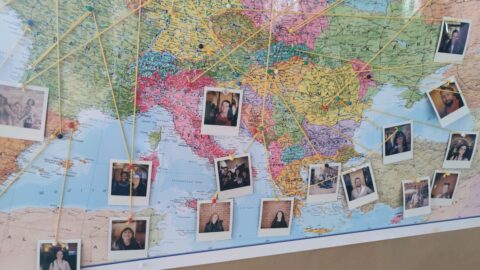
    The “Against Oblivion” project hosted participants from various European countries who explored the history of the Second World War in Slovenia. The young people visited and researched the sites of war crimes in Maribor, Ljubljana, Celje, and Kočevje.

    They learned about different aspects of perceiving history, the theme of human rights, and the basic concepts of international law.
    They also listened to the testimonies of children and adults, compared events from the Slovenian area with occurrences in their home countries, critically evaluated the actions of that time, and connected them with current social issues.

    They particularly questioned the importance of remembering the past and the individuals involved in the events that marked generations.

    During their visit to Celje, they also met with the German Ambassador, who joined them and shared her perspective on the significance of remembrance and reconciliation.

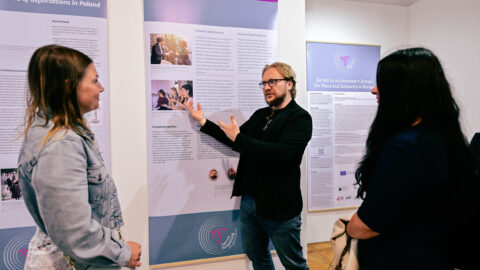
    Their findings will be presented in an exhibition and a podcast in 2026 at the Museum of National Liberation Maribor. The exhibition will feature the young people’s research on the topic of war crimes from Slovenia, Bosnia and Herzegovina, France, Germany, Hungary, and Poland.

    Foto: Maja Pegan.

    ‘The project is co-funded by the European Union. The views and opinions expressed are solely those of the author(s) and do not necessarily reflect those of the European Union or EACEA. Neither the European Union nor the granting authority can be held responsible for them.’

  • Against Forgetting – Together for the memory and future of Europe

    Against Forgetting – Together for the memory and future of Europe

    Against Forgetting is an international youth project coordinated by Volksbund Deutsche Kriegsgräberfürsorge e.V. The project brings together partners from various European countries with the aim of researching the history of war crimes, genocides, and human rights violations in the 20th century and their impact on contemporary society. The project’s goal is to enable young people, aged between 15 and 30, to critically reflect on the mechanisms of hatred, antisemitism, and discrimination, and to strengthen their commitment to European values and democracy.

    The National Liberation Museum Maribor is a proud partner in the Against Forgetting project. Our role is based on many years of museum practice in researching, documenting, and presenting the history of World War II, the resistance against occupation, and post-war events in the territory of Slovenia.

    Within the framework of the project, in the summer of 2025, in cooperation with and under the guidance of the National Youth Council of Slovenia, we will host the international youth exchange “Against Forgetting: Faces of Resistance from World War II in Slovenia”, where we will:

    • lead historical research on the resistance in Styria and elsewhere in Slovenia,
    • organize visits to important locations (museum, memorial sites, former prisons, burial grounds),
    • prepare discussions and workshops with young people from different European countries,
    • participate in the development of content for an international exhibition and podcast.

    Through the personal stories of victims, witnesses, and individuals who resisted violence, we help young people understand the past with empathy and critical reflection.

    Young people create history

    The participants, in collaboration with our museum, will co-create a part of the European exhibition that focuses on forgotten or suppressed faces of resistance. They also contributed to a podcast in which they explored the meaning of historical memory and its impact on the present.
    More information about the exchange and how you can participate can be found on the MSS website.

    Why Against Forgetting?

    At the National Liberation Museum, we believe that understanding the past is crucial for preventing the repetition of its darkest chapters. The Against Forgetting project is not just historical, but primarily a humanistic call for a shared European reflection on the past and future.

    More information about the project: Against Forgetting – Volksbund

    Project Partner

    The Against Forgetting project is based on the cooperation of various organizations from Europe, each contributing their knowledge and experience:

    • Volksbund Deutsche Kriegsgräberfürsorge e.V. (Germany) – the main coordinator of the project, dedicated to preserving war graves and educating young people.

    • Les Francas (France) – an organization with over 80 years of experience in children and youth education, collaborating with educational institutions, associations, and local authorities.

    • Association Education Builds Bosnia and Herzegovina – Jovan Divjak (Bosnia and Herzegovina) – an organization founded in 1994 that helps children who are victims of war, children and youth with special needs, and members of the Roma minority with their education.
    • Zachor Foundation for Social Remembrance (Hungary) – established in 2009, dedicated to preserving the memory of the Holocaust and educating about tolerance and human rights.

    • College of Eastern Europe (Poland) – an independent research institute focusing on Central European affairs, promoting democratic values and European integration.
    • National Youth Council of Slovenia (Slovenia) – the national youth council representing the interests of young people in Slovenia and participating in the organization of youth exchanges and educational programs.

    Project Patrons:

    ‘The project is co-funded by the European Union. The views and opinions expressed are solely those of the author(s) and do not necessarily reflect those of the European Union or EACEA. Neither the European Union nor the granting authority can be held responsible for them.’

  • The opening event of the “Against Forgetting” peace congress: Powerful starting points for reflection on memory, responsibility, and humanity.

    The opening event of the “Against Forgetting” peace congress: Powerful starting points for reflection on memory, responsibility, and humanity.


    On May 9, 2025, the opening event of the international peace congress “Against Forgetting for Peace and Solidarity in Europe” took place in Berlin, marking the beginning of a two-year European youth project dedicated to exploring history and current social challenges.

    On the 80th anniversary of the end of World War II in Europe, more than 110 young people from 17 countries participated in the introductory workshops and discussions. The opening address was given by the esteemed Ukrainian lawyer and human rights activist Dr. Tetiana Pechonchyk (ZMINA), who spoke about the role of civil society in prosecuting war crimes, especially in the context of the war in Ukraine.

    An important part of the program was also a workshop co-led by Uroš Dokl from the National Liberation Museum Maribor (MNOM) and Sabina Belc from the National Youth Council of Slovenia (MSS). Under their mentorship, participants explored the complexity of individuals and their roles within wartime conditions. The workshop prompted reflection on the question: What does it mean to remain human in inhuman circumstances?

    The youth rated the workshop as one of the best at the entire congress.


    The peace congress in Berlin thus successfully laid the groundwork for further activities that will take place in various countries, including Slovenia.


  • The exhibition “They Expelled Us” at the National Museum in Niš.

    The exhibition “They Expelled Us” at the National Museum in Niš.

    The Museum of National Liberation Maribor hosted the exhibition “They Expelled Us” at the National Museum Kraljevo in October 2024. The successful hosting led to the idea and agreement to also host the exhibition in Niš, specifically at the National Museum in Niš in the area of the Red Cross concentration camp.

    The exhibition, which depicts the events at the beginning of the Second World War in the Kingdom of Yugoslavia, was opened on April 10, 2025. The opening was attended by four representatives of the museum: the director Simona Tripkovič, the author of the exhibition Dr. Irena Mavrič Žižek, the curator educator Uroš Dokl, and the head of the technical service Zlatko Kresnik. The Slovenian delegation also included a representative of the Municipality of Maribor, namely the city councilor and president of the Culture Committee Davorka Pregl, and representatives of the Office for Culture and Youth, the head of the office Nina Kirbiš and Martina Kositer. This makes us very happy, as we are thus convinced that our founder supports our work. The opening was attended by high representatives of the city authorities from Niš, namely the Deputy Mayor of the City Municipality of Niš Vili Hadžić, the Assistant Director of the National Museum in Niš Marina Vlaisavljević, and representatives of the Palilula Municipality, councilor Predrag Petrović, Ivana Jocić Veselić, and Milan Nikolić. The president of the Slovenian Society France Prešeren in Niš, Ivica Gruden, also honored us with his presence. The opening was covered by numerous Serbian media outlets: Bellami, Kopernikus, Zona TV, and Boom 18.

    The English translation is:
    The curator from the National Museum in Niš, Ivana Gruden Milentijević, gave us an excellent and professional guided tour of the exhibitions at the Red Cross concentration camp. We also visited Bubanj, where numerous hostages were shot during the Second World War, and then we viewed the Mediana archaeological site and the unique Skull Tower (Čele kula).

    We were received by representatives of the city authorities, namely the mayor and the representative for culture in the city council of the City Municipality of Niš, Ivana Cvetković.